Learn how to find and identify rodent entry points in your home with easy inspection steps.
Quick Answer to Your Question
How to Find Rodent Entry Points in Your Home ? A Complete Inspection Guide for Redwood City Homeowners
Rodent entry points are any gap larger than 1/4 inch (about a pencil width) that lets rats or mice enter your home. To find them, inspect your foundation, walls, pipes, doors, windows, vents, roof, attic, garage, and basement.
Look for signs like droppings, grease marks, gnaw marks, and damaged insulation. Common entry points in Redwood City homes include pipe gaps, foundation cracks, worn weatherstripping, roof vents, soffit gaps, and door spaces.
Professional tools like thermal cameras can also help find hidden entry points that are hard to see.
Introduction To The Rodent Entry Problem
Finding how rodents enter your home is the first and most important step in solving an infestation.
Many homeowners in Redwood City only notice rodents after hearing scratching sounds at night or finding droppings in the kitchen. By then, rodents have already entered through hidden gaps.
Around 21 million U.S. homes deal with rodent problems each year. In Redwood City and nearby areas, this issue often gets worse in fall and winter when rodents look for warm shelter and food indoors.
Rodents can fit through very small openings. Mice can squeeze through holes as small as 1/8 inch, and rats only need about 1/4 inch. That’s why even tiny cracks matter.
Understanding Redwood City Climate and Rodent Activity
Redwood City has a mild Mediterranean climate with wet winters and dry summers. This weather affects rodent behavior.
During November to March (rainy season), rodents move indoors to stay warm and dry. In spring and summer, they still breed but are less likely to enter homes. In late summer and fall, activity increases again as they prepare for winter.
Older homes in Redwood City often have more risk. Settled foundations, aging pipes, and worn seals create many possible entry points.
Systematic Room-by-Room Inspection Strategy
The best way to find entry points is to inspect your home step by step, not randomly.
1. Exterior Foundation and Basement
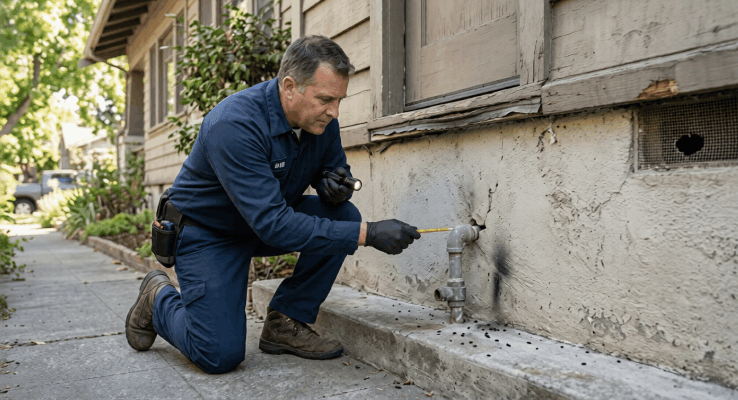
Start by walking around your home’s foundation.
Look for cracks, holes, and gaps where materials meet. Focus on corners and areas where the ground has settled or washed away.
Use a flashlight to check dark areas. Rodents often travel along walls and edges.
Check where pipes, wires, and gas lines enter the home. These are very common entry points.
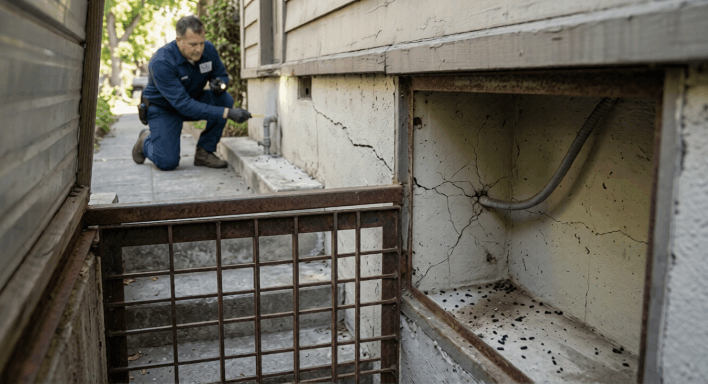
Inside the basement, inspect walls and corners carefully. Rodents often travel along basement edges before moving upstairs.
2. Kitchen, Bathroom, and Laundry Areas
These areas have many pipe openings, making them common rodent entry routes.
Check under all sinks. Look at where pipes go into walls or floors.
Inspect behind appliances like stoves, fridges, dishwashers, and washing machines. Gaps often form around plumbing or wiring.
Old or missing sealant is a warning sign. Movement of appliances over time can also create new openings.
3. Walls and Baseboards
Rodents may move inside wall cavities from one room to another.
Check baseboards for gaps, especially in corners and door edges.
Look for chew marks on wood or trim. Fresh damage looks lighter in color.
Pay attention to small gaps near door frames and wall joints.
4. Garage and Storage Areas
Garages are high-risk areas because they often contain food, storage boxes, and clutter.
Check the garage door seal carefully. Rubber strips often wear out.
Look for gaps along the sides and bottom of the door.
Inspect corners, shelves, and stored items for droppings or nesting material.
Also check where pipes and cables enter the garage walls.
5.Attic, Crawlspace, and Roof Areas
These areas often hide serious entry points but are easy to miss.
In the attic, look for droppings, nests, and shredded materials.
Check vents, roof joints, and pipe openings. Damaged vent covers are common entry routes.
In crawlspaces, inspect foundation edges, vapor barriers, and utility openings.
Signs of Active Rodent Entry Points
Droppings
Fresh droppings are dark and soft. Old ones are dry and gray.
Mouse droppings are small like rice grains. Rat droppings are larger and oval.
Droppings near holes usually mean active entry.
Grease Marks
Rodents leave dark smudges on walls and edges from their fur.
These marks show repeated travel paths and active routes.
Powder Test
Sprinkle flour or talcum powder near suspected entry points.
Check after 24 hours. If disturbed, rodents are active there.
Sounds
Rodents are most active at night.
Listen for scratching, chewing, or movement in walls and ceilings.
Common Entry Points in Redwood City Homes
Foundation Gaps
Cracks and utility line openings are very common.
Roof and Soffit Areas
Loose soffits or damaged roof vents allow attic access.
Eaves
Older homes often have open or loose eaves that create gaps.
Weatherstripping wears out over time, creating small openings.
Chimneys
Uncapped or damaged chimneys are easy entry points.
Modern Detection Tools
Professional pest control teams may use:
Thermal Cameras
These detect heat changes and hidden gaps in walls.
Small Inspection Cameras
Used to see inside walls and tight spaces.
Moisture and Air Tests
Help identify hidden damage and rodent activity zones.
Inspection Checklist
Exterior
- Foundation cracks
- Pipe entry points
- Roof vents
- Soffits and fascia
- Doors and windows
- Garage seals
- Chimney condition
Interior
- Basement corners
- Under sinks
- Behind appliances
- Baseboards
- Attic access
- Garage walls
What to Look for Inside
Dropping Patterns
Clusters show active travel routes.
Nests
Made from paper, fabric, or insulation.
Damage
Rodents chew food packaging, wood, plastic, and wires.
Smells
Strong ammonia smell often means active infestation.
Sealing Entry Points
Small Gaps
Use exterior caulk.
Medium Gaps (1/4 to 1/2 inch)
Use steel wool plus caulk.
Larger Gaps
Use metal mesh or hardware cloth.
Very Large Damage
May need patching, wood replacement, or concrete repair.
When to Call a Professional
Call a professional if:
- Rodents return after sealing
- You hear noise but can’t find entry
- Damage is severe
- Attic or crawlspace access is difficult
- You suspect a large infestation
Ongoing Prevention
After sealing entry points:
- Recheck seals every few months
- Inspect weatherstripping yearly
- Keep vegetation away from walls
- Use powder tests occasionally
- Check attic and garage regularly
Conclusion
Finding rodent entry points takes time and careful inspection.
Most homes have multiple small gaps, but only a few are actively used. Focus on those first.
Use a step-by-step inspection method, look for clear signs like droppings and grease marks, and seal openings properly.
For best results, combine sealing with cleanup and ongoing monitoring to prevent rodents from returning.
FAQs
What attracts rodents to a house?
Rodents are attracted by food, water, shelter, cluttered storage areas, pet food, garbage, and easy access points around the home.
Can mice enter through air vents?
Yes. Mice can enter through damaged vent screens, attic vents, crawlspace vents, and HVAC openings if they are not properly protected.
How often should homeowners inspect for rodent entry points?
Experts recommend inspecting your home at least twice a year, especially before fall and winter when rodent activity increases.
What smell keeps rodents away?
While some scents such as peppermint oil may temporarily discourage rodents, sealing entry points remains the most effective long term solution.

- 640 Bair Island Road Suite 107 Redwood City CA 94063 United States
Providing reliable rodent inspection, removal, exclusion, and prevention services for homes and businesses throughout Redwood City. Fast response, effective solutions, and long-term protection.
Quick Links
Visit our Redwood City service hub near Courthouse Square; full parking and access details are shared after your appointment is scheduled.